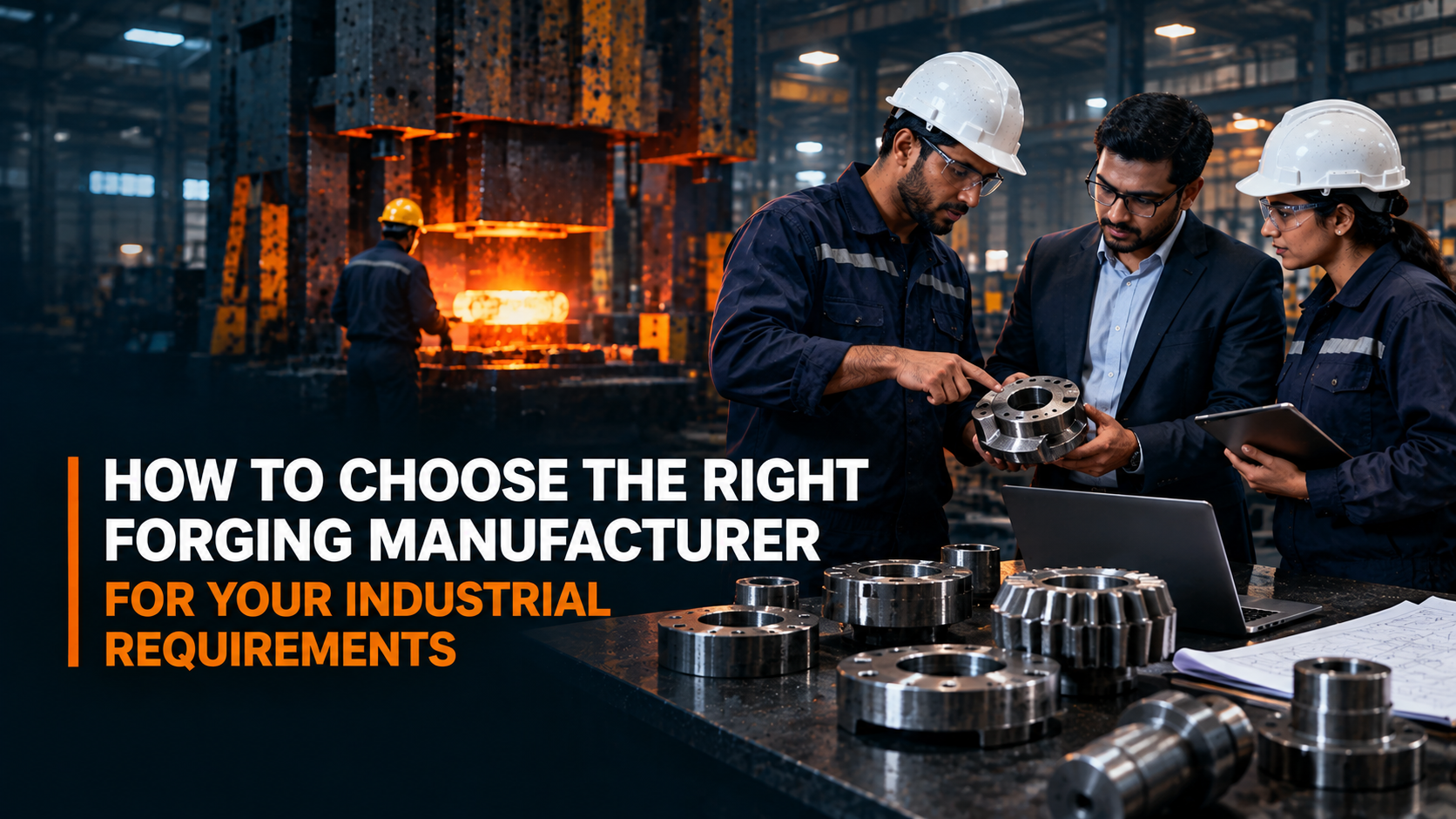
Industrial component manufacturing can involve multiple suppliers. One supplier handles forging. Another handles heat treatment. Another handles machining. A separate facility may perform inspection.
While this traditional fragmented model has existed for decades, it introduces friction into modern engineering operations. When heavy industrial equipment, automotive drivelines, power generation plants, or defense platforms require high-integrity forged parts, managing a daisy-chain of independent vendors consumes valuable engineering hours, escalates freight costs, expands transit lead times, and multiplies quality dispute risks.
While this multi-vendor model can work, it can also create additional coordination, transportation and scheduling challenges. Today's leading OEM procurement teams are increasingly shifting toward a single-source integrated manufacturing strategy.
The Integrated Approach: End-to-End Process Flow
An integrated manufacturing partner can coordinate multiple stages seamlessly under one roof:
In an integrated model, there are no disjointed sub-contracts or shipping waybills between stages. Every manufacturing phase is synchronized from the moment certified steel billets enter the yard to the final delivery of the crated, precision-machined component.
Key Benefits of an Integrated Manufacturing Partner
Simplified Coordination
Fewer manufacturing handovers can make communication easier.
Instead of tracking four separate purchase orders, corresponding with distinct production managers, and reconciling conflicting drawing revisions across multiple shops, buyers communicate with a single dedicated engineering contact. Revisions and scheduling updates are communicated instantly across shop floor departments without information loss.
Better Process Continuity
Each stage can be planned around the requirements of the next stage.
Forging engineers design hammer dies and upsetting schedules with precise knowledge of downstream rough machining tooling. Rough machining allowances are engineered specifically to account for thermal expansion, quench distortion, and decarburization depth. Because downstream machinists work alongside metallurgists, processes operate in harmony rather than in isolation.
Reduced Logistics Complexity
Moving components between multiple suppliers can add time and handling requirements.
Transporting heavy forged shafts, rolled rings, and solid blocks between separate forging facilities, external heat treatment furnaces, and third-party CNC shops creates transit lag, extra crane handling, double-handling damage risks, and inflated freight bills. Consolidated manufacturing keeps workpieces moving inside an optimized internal production layout.
Improved Accountability
Having one primary manufacturing partner can simplify responsibility for overall delivery.
In a fragmented supply chain, if a sub-surface metallurgical inclusion is exposed during finish machining, or if hardness fails specification after heat treatment, disputes inevitably arise over which vendor bears financial and scrap liability. An integrated partner accepts full, single-point accountability for meeting final drawing dimensions and mechanical certifications.
Consistent Quality Approach
Process control and inspection can be coordinated across manufacturing stages.
A single quality management system governs every checkpoint—from raw material spectrometry and ultrasonic testing (UT) through furnace pyrometry recordings, magnetic particle inspection (MPI), and final coordinate metrology. Documentation, traceability heat numbers, and EN 10204 3.1 inspection certificates are unified and audit-ready.
Multi-Vendor Sourcing vs. Integrated Manufacturing: A Direct Comparison
To evaluate the business impact on engineering timelines and procurement costs, consider the operational trade-offs:
| Operational Factor | Fragmented Multi-Vendor Model | Integrated Manufacturing Model |
|---|---|---|
| Procurement Administration | 3 to 5 separate purchase orders, invoices, and supplier audits. | 1 consolidated PO from raw billet to finished component. |
| Lead Times & Freight | Inter-facility loading, waiting in vendor queues, transit delays. | Continuous internal workflow; significantly shorter turnaround. |
| Quality Risk & Scrap Liability | Frequent finger-pointing between forger, heat treater, and machinist. | 100% single-source accountability for physical and metallurgical specs. |
| Process Tolerancing | Excessive machining allowances added by conservative forgers. | Optimized allowances tailored precisely to CNC finishing requirements. |
| Inspection & Traceability | Disjointed test reports, gaps in heat number continuity. | Unified EN 10204 3.1 documentation package with full traceability. |
Forgewell Industries: Comprehensive Integrated Capabilities
Forgewell Industries provides a combination of Open Die Forging, Closed Die Forging, Rough Machining, Heat Treatment, Finish Machining and Quality Inspection.
This integrated capability allows customers to work with a single manufacturing partner for multiple stages of their component requirements. Based in Pune, Maharashtra, our manufacturing infrastructure includes:
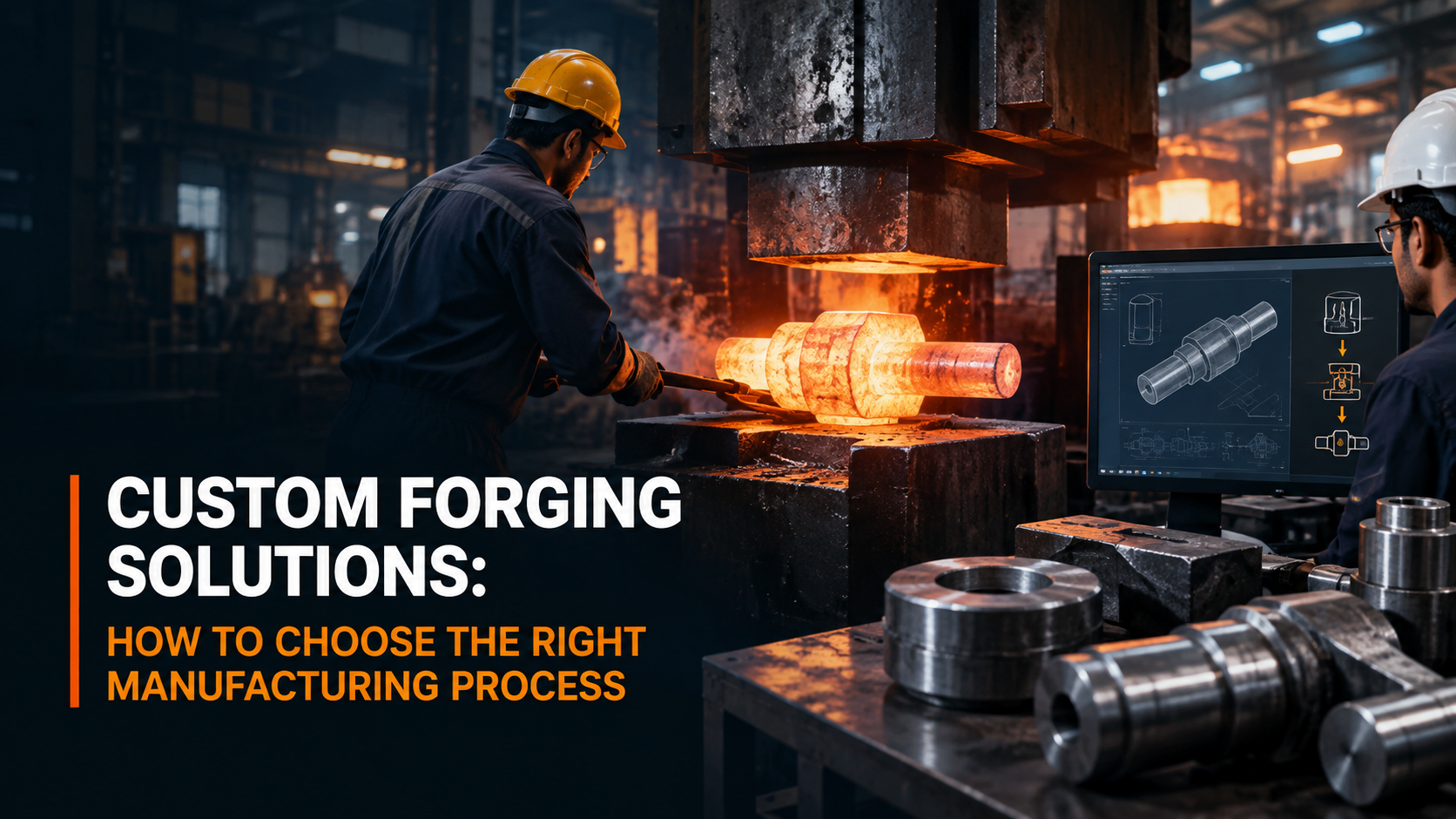
- Open Die Forging: Pneumatic power hammers up to 1500 kg capacity handling components up to 800 mm diameter and 500 kg per piece.
- Closed Die Forging: Precision impression die capabilities for repeatable, higher-volume structural components.
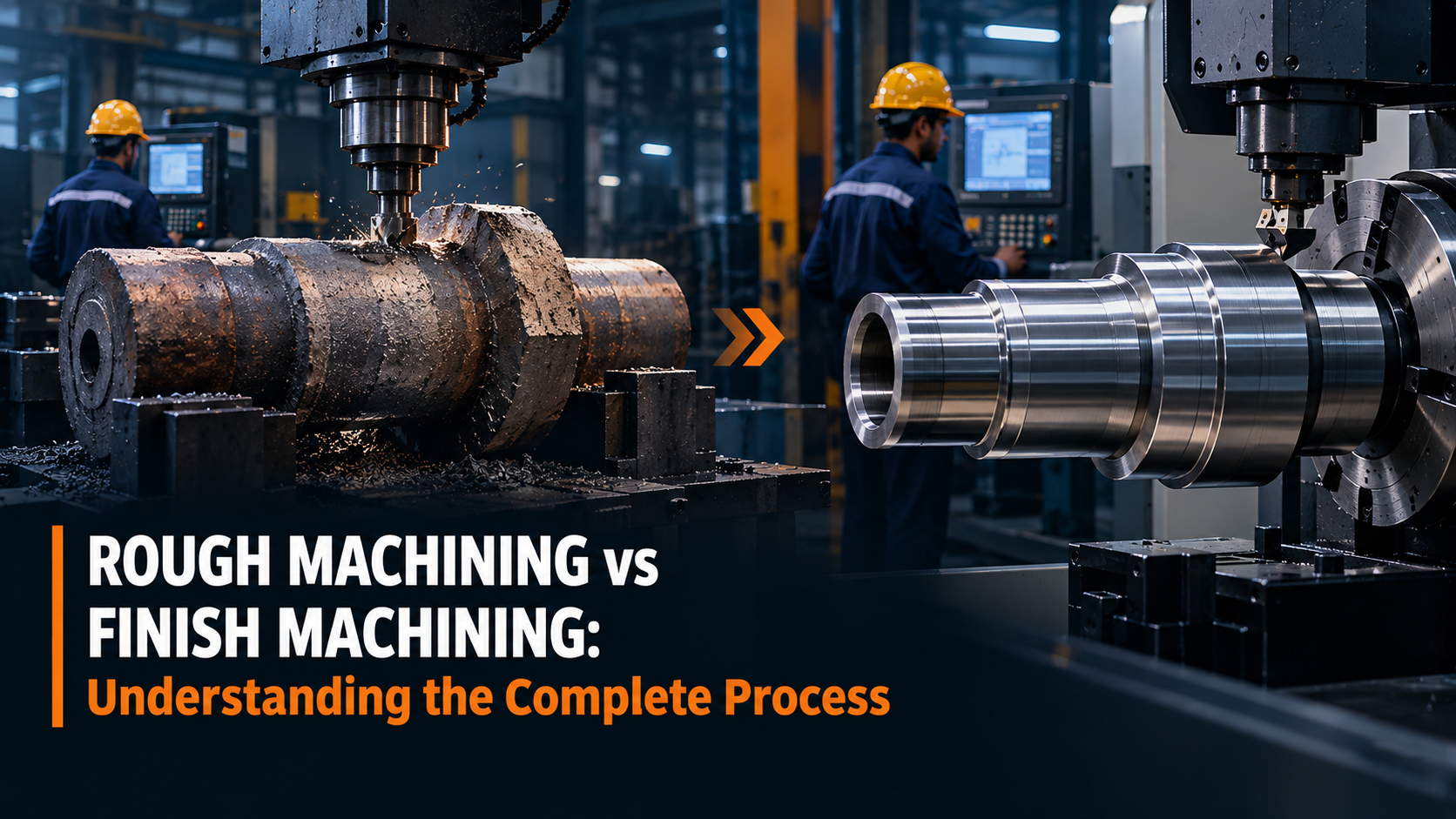
- In-House Rough Proof-Machining: Heavy-duty turning lathes to remove oxide scale, eliminate raw stock, and prepare smooth acoustic coupling surfaces for 100% volumetric Ultrasonic Testing (UT).
- Thermal Heat Treatment: Controlled furnaces executing Normalizing, Annealing, Quench & Temper (Q&T), and Stress Relieving to certified hardness and tensile benchmarks.
- Precision Finish Machining: Modern CNC turning centers, vertical boring mills, and milling machinery capable of holding tight micron-level drawing tolerances and fine surface finishes.
- Quality Inspection & NDT: NABL-accredited in-house laboratory testing, optical emission spectrometers, Level II UT/MPI/DP examination, and coordinate dimensional metrology.
Conclusion: Choosing the Right Manufacturing Partner
For industrial buyers, the right manufacturing partner is not simply the company that can forge a component. It is the partner that can understand the complete requirement, manage the manufacturing process and deliver a component ready for its intended application.
Forgewell Industries — From Forging to Finished Component.