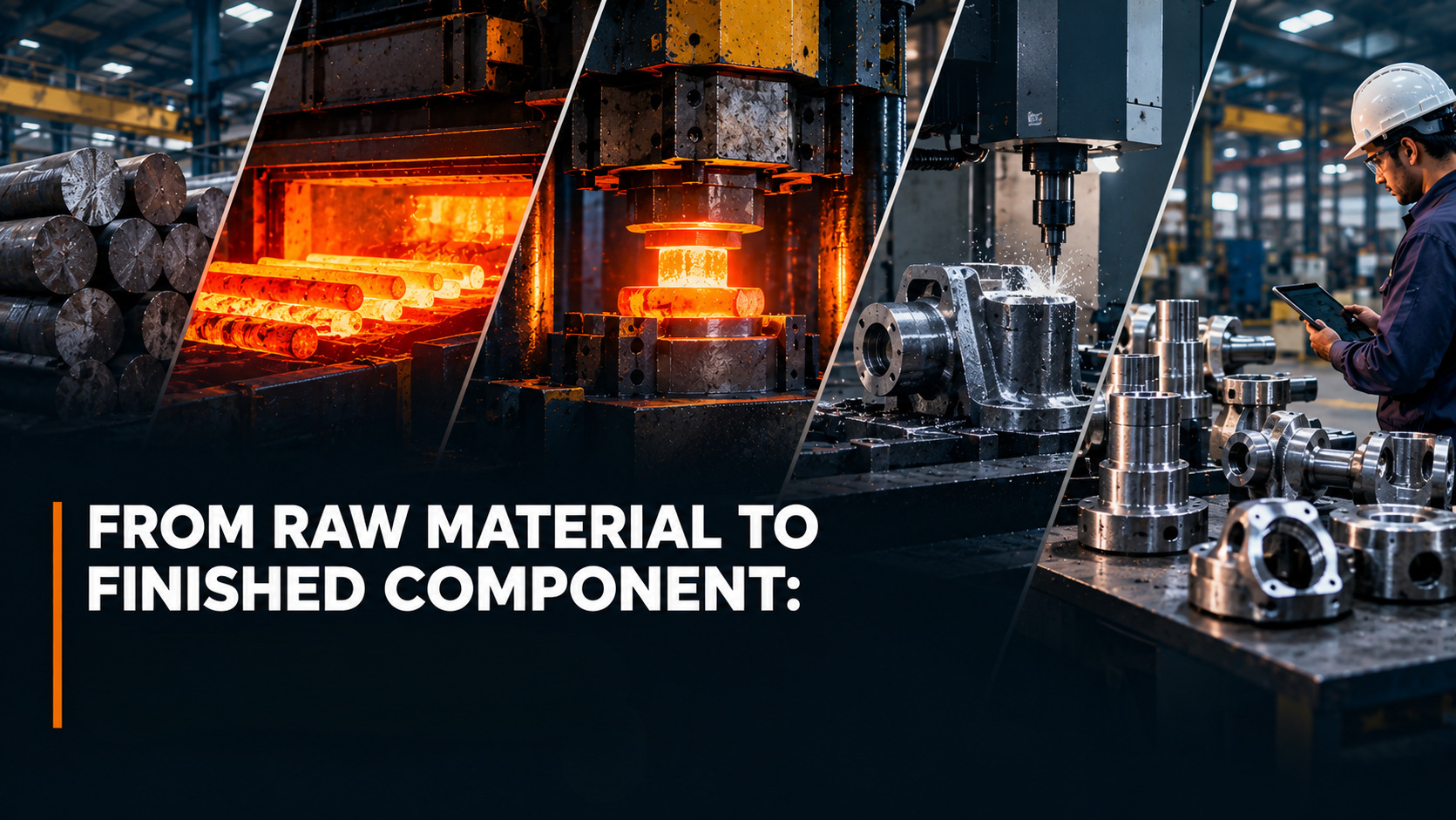
Selecting the correct forging process can directly influence component quality, production efficiency, cost and lead time. Two important forging methods are Open Die Forging and Closed Die Forging.
Open Die Forging
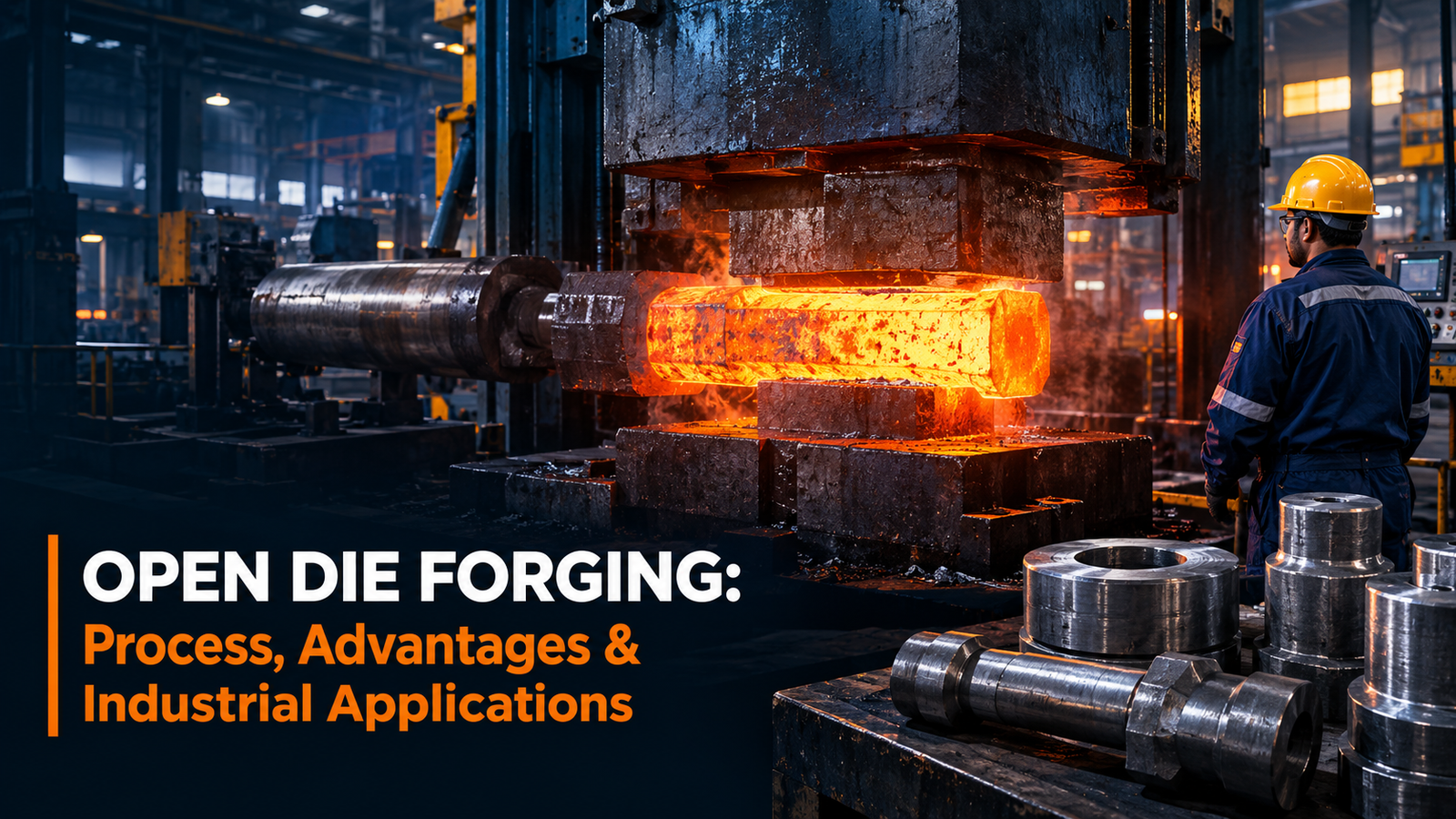
Open die forging uses dies that do not completely enclose the workpiece. It provides exceptional flexibility and is particularly suitable for larger, heavier and customized components. The metal is shaped through repetitive compressive blows and progressive repositioning, allowing for custom dimensional adjustments without costly tooling investments.
Closed Die Forging
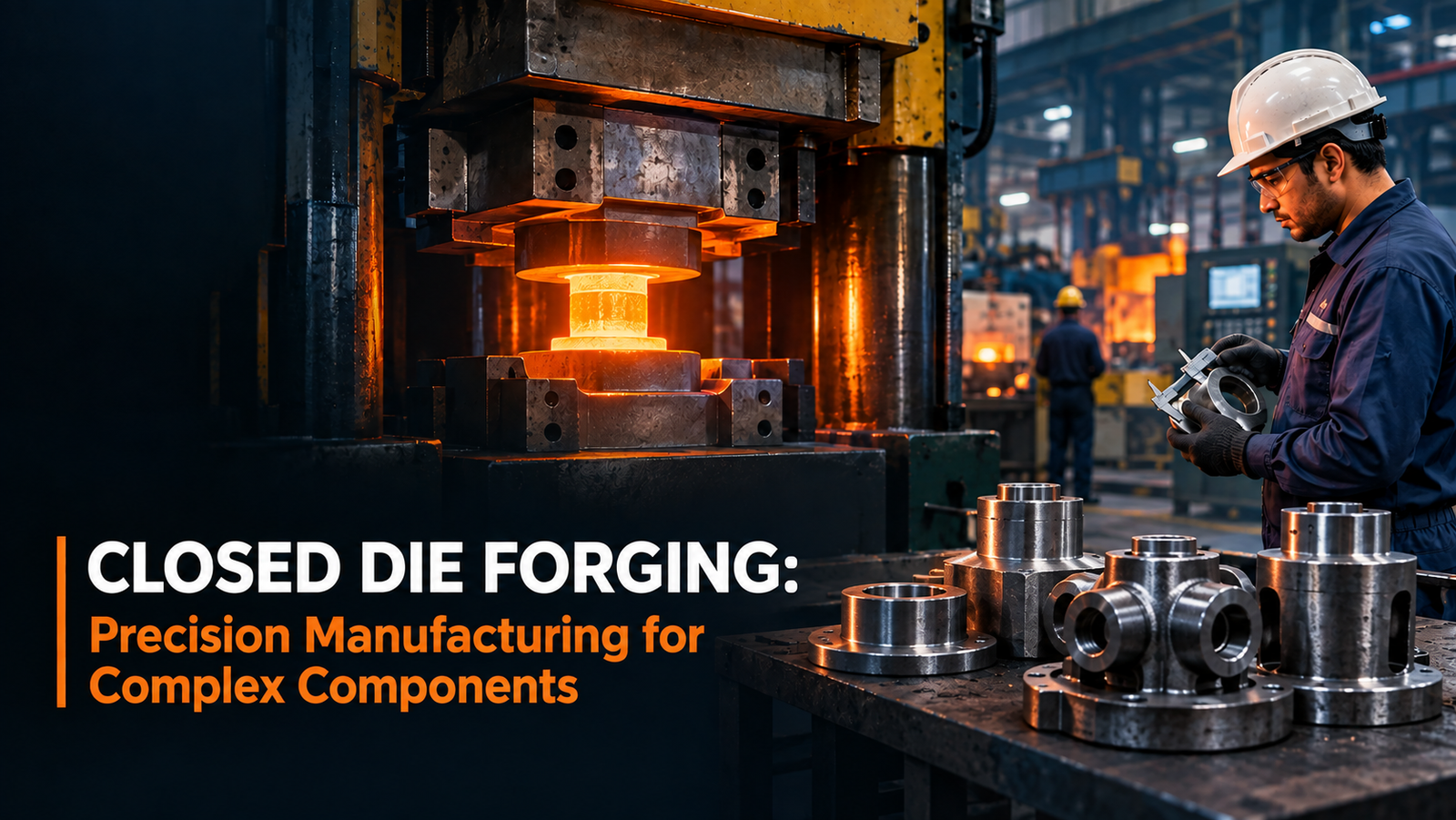
Closed die forging uses precision-engineered dies containing a defined cavity. The heated material flows into the cavity under controlled mechanical or hydraulic pressure to create the required component geometry. This process produces parts with repeatable geometries and tight dimensional tolerances, ideal for high-volume manufacturing.
Key Differences at a Glance
| Parameter | Open Die Forging | Closed Die Forging |
|---|---|---|
| Flexibility | High flexibility for varied shapes | Dedicated tooling required per geometry |
| Component Size | Ideal for large, heavy-duty parts | Small to medium complex profiles |
| Production Volume | Low to medium batch production | Medium to high-volume manufacturing |
| Geometry & Detail | Simple to moderate shapes (shafts, rings, blocks) | Complex profiles and defined cavity shapes |
| Repeatability | Operator-driven dimensional accuracy | Extremely high part-to-part consistency |
How to Choose the Right Process?
Deciding between open die and closed die forging depends on your volume, size, geometry, and turnaround needs:
Choose Open Die Forging When:
- You need large components (up to 800mm diameter or 500kg per piece)
- You require customized shapes without upfront die tooling costs
- Your order consists of heavy cross-sections, shafts, blanks, or rings
- You require flexible, low-to-medium volume production schedules
Choose Closed Die Forging When:
- You need repeatable geometry with tight dimensional tolerances
- The component has complex shapes and contours
- You require consistent production part after part
- You are running higher-volume manufacturing programs
The Forgewell Advantage
Forgewell Industries offers both Open Die and Closed Die Forging, allowing customers to select a process based on actual component requirements rather than forcing every component into one manufacturing method.
Whether you require single customized large forged blanks or recurring batches of high-precision components, our Pune manufacturing facilities deliver international quality, NABL-accredited testing, and ISO 9001:2015 certified metallurgical excellence.
Forgewell Industries — Strength Forged. Precision Delivered.