Make in India isn't just a slogan in our shop — it's the operating context. Every component we forge for an Indian customer is one that doesn't have to ship in from overseas, and one more piece of supply-chain resilience for the country.
What Make in India Means in Practice
For a forging manufacturer, the initiative shows up in three concrete ways:
- Import substitution. Components that used to land at Indian ports are now being engineered, forged, and certified locally — at quality levels that match the imports they replace.
- Capacity for domestic OEMs. Indian automotive, defence, and infrastructure programs need local forging partners who can scale with them.
- Skill-building inside the supply base. A growing network of local forgers, machine shops, and heat-treatment facilities raises the floor for everyone.
How Forgewell Contributes
Indigenous Capacity Investment
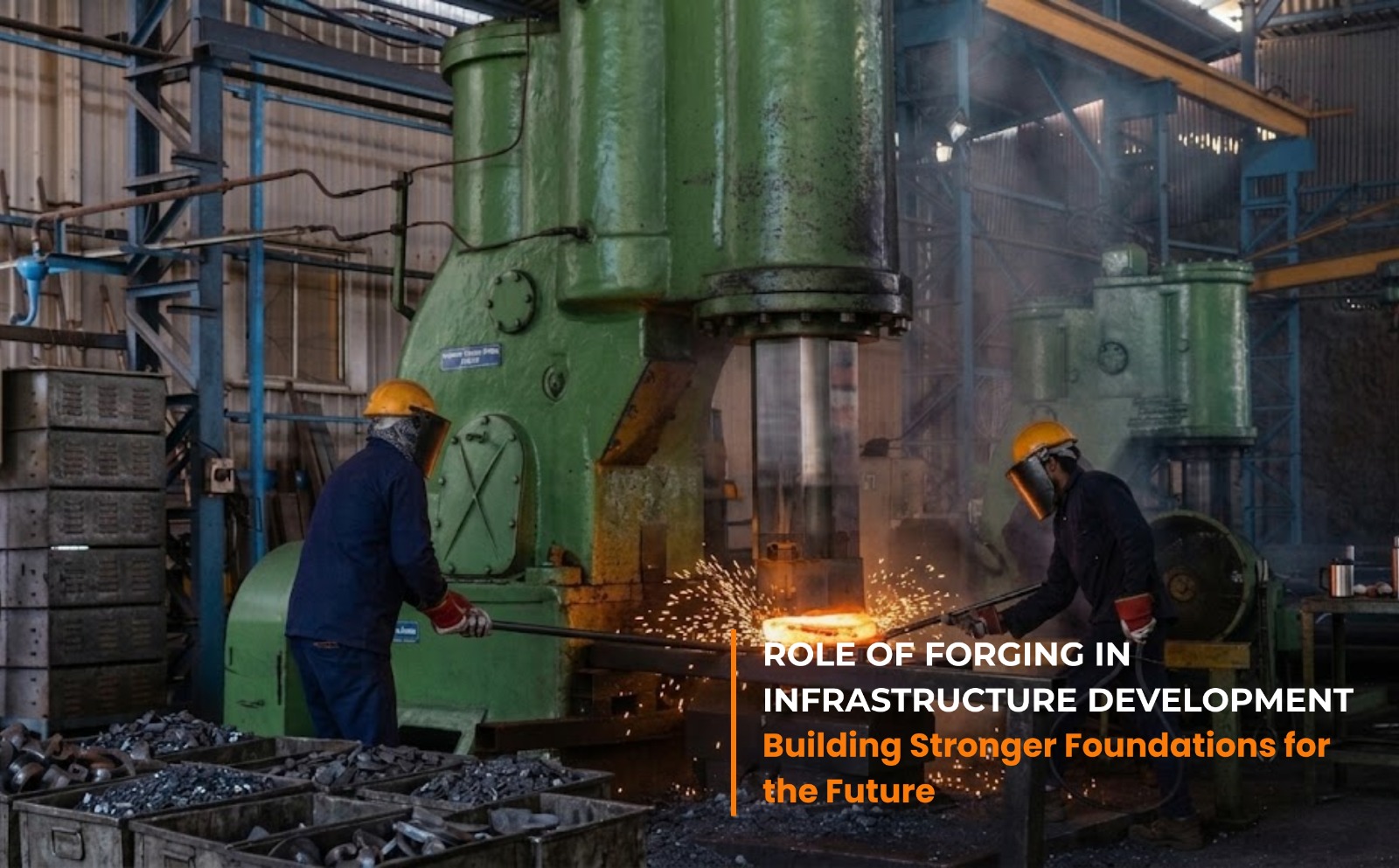
Two production units in Pune — Chikhali and Chakan — running pneumatic hammers up to 1500 kg, with capacity to forge components up to 800 mm in diameter and 500 kg per piece. Built in India, by Indian engineers, serving Indian and global customers from Indian soil.
Quality at International Standards
ISO 9001:2015 certification by TUV NORD, NABL-accredited in-house testing labs, and traceable QA processes — the kind of quality system that lets us replace imported parts without dropping the bar.
Materials Sourced Domestically
Working with Indian steel suppliers — SAIL, SAARLOHA, Bajaj Mukand — keeps the value chain local and the foreign-exchange leakage low.
Serving Strategic Sectors
Automotive, defence, oil & gas, power, and heavy industrial — the sectors most central to India's manufacturing future are the ones we forge for every week.
Why It Matters Beyond Slogans
Resilient supply chains aren't built on policy announcements — they're built on shop floors. Every Indian-forged component is a small reduction in dependency, a small gain in margin, and a small step toward the manufacturing base the country is determined to grow.