
Metal Forging Industry Trends 2025: What Forgewell Industries Sees for the Future
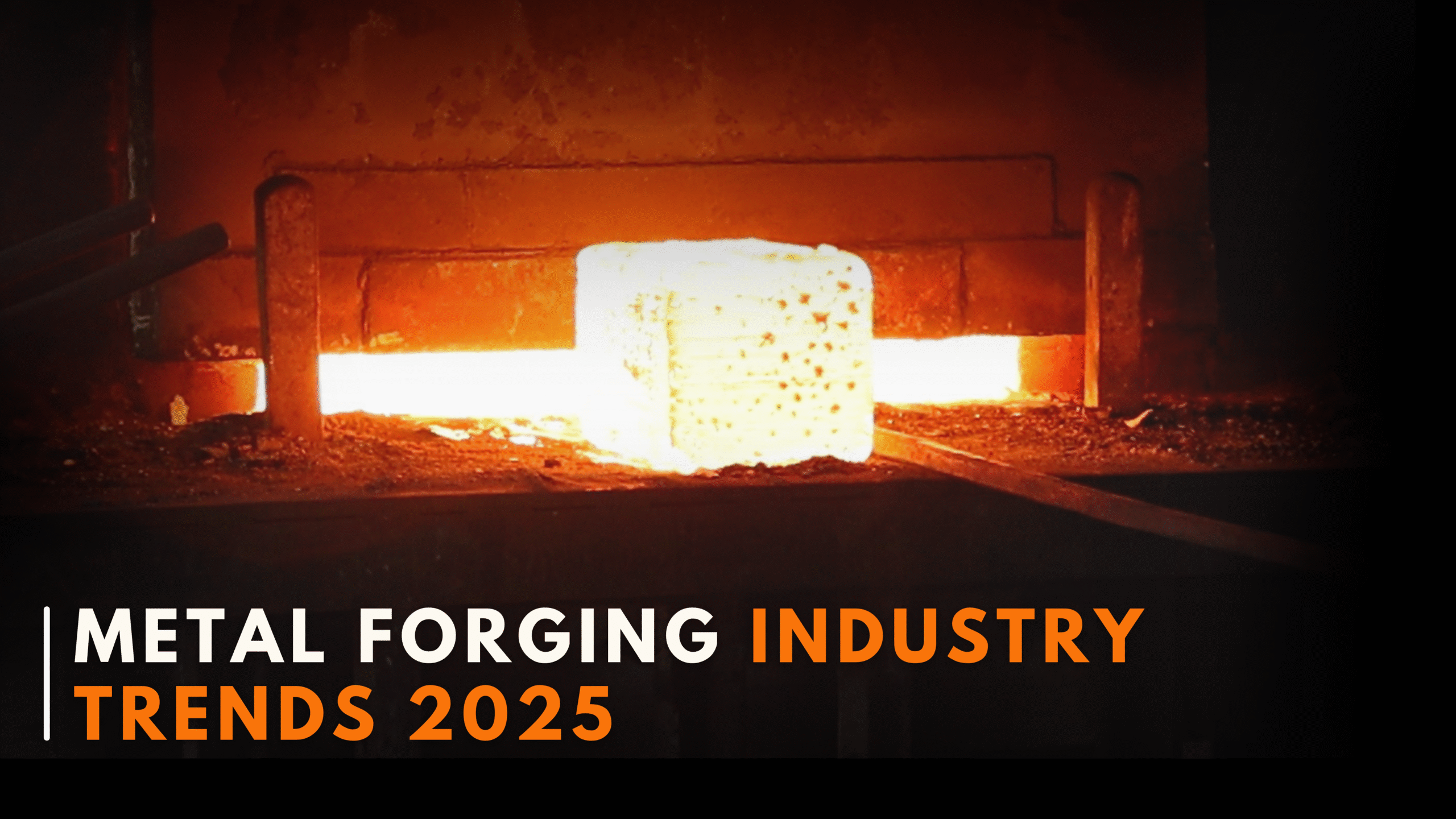
The metal forging industry stands at an exciting crossroads in 2025, driven by technological innovation, sustainability demands, and evolving manufacturing needs. As a leading forging manufacturer in Pune, Forgewell Industries has witnessed these transformations firsthand and is actively adapting to meet the changing landscape of precision forging and CNC machining.
The Current State of the Global Forging Market
The global forging market is experiencing robust growth, with industry analysts projecting expansion from $82.8 billion in 2023 to over $120 billion by 2030. This represents a compound annual growth rate of approximately 7.4%, reflecting strong demand across automotive, aerospace, construction, and industrial machinery sectors.
In India, the forging industry is particularly dynamic. The country has emerged as a significant player in global forging exports, with Pune-based manufacturers like Forgewell Industries contributing to this growth through advanced manufacturing capabilities and quality certifications.
Top 5 Metal Forging Trends Shaping 2025
1. Electric Vehicle (EV) Revolution Driving Aluminum Forging Demand
The automotive industry’s pivot toward electric vehicles has created unprecedented opportunities for forging manufacturers. Unlike traditional internal combustion engines, EVs require lightweight components to maximize battery efficiency and extend driving range.
Forgewell Industries has observed a significant shift in customer requirements, with automotive clients increasingly requesting aluminum forged components. The aluminum forging segment is growing at 8.4% annually, outpacing traditional steel forging. Key EV components requiring precision forging include:
- Battery housing brackets and structural supports
- Motor shaft assemblies
- Suspension components optimized for weight reduction
- Steering system parts with enhanced strength-to-weight ratios
- Chassis reinforcement elements
The lightweight nature of aluminum, combined with the superior grain flow achieved through forging, makes these components ideal for electric vehicle applications where every kilogram matters.
2. Sustainability and Green Manufacturing Initiatives
Environmental consciousness has moved from a competitive advantage to a business imperative. Forging companies are implementing sustainable practices throughout their operations:
Energy Efficiency: Modern forging facilities are adopting energy-efficient furnaces and induction heating systems that reduce carbon emissions by up to 30% compared to traditional methods.
Material Optimization: Near-net-shape forging techniques minimize material waste, with some processes achieving over 90% material utilization rates. At Forgewell Industries, our closed-die forging processes are designed to reduce scrap generation while maintaining tight tolerances.
Recyclability: Both steel and aluminum used in forging are infinitely recyclable without loss of properties. This circular economy approach aligns with global sustainability goals and reduces the environmental footprint of manufactured components.
Water Conservation: Advanced cooling systems and closed-loop water recycling are becoming standard in modern forging facilities, reducing water consumption by significant margins.
3. Industry 4.0 and Smart Manufacturing Integration
Digital transformation is revolutionizing how forging companies operate. The integration of Industry 4.0 technologies enables:
Real-Time Quality Monitoring: IoT sensors embedded in forging presses and machining centers provide continuous data on temperature, pressure, and dimensional accuracy. This allows for immediate corrective actions and reduces defect rates.
Predictive Maintenance: Machine learning algorithms analyze equipment performance data to predict potential failures before they occur, minimizing downtime and maintaining consistent production schedules.
Digital Twin Technology: Virtual simulations of forging processes help optimize die design, reduce trial-and-error iterations, and improve first-time-right quality rates.
Automated Material Handling: Robotic systems are increasingly handling material movement, positioning, and part manipulation, improving workplace safety while enhancing productivity.
Forgewell Industries is progressively incorporating these technologies into our Pune facility, with advanced CNC and VMC machining centers featuring automated tool management and in-process quality verification.
4. Precision Requirements and Tighter Tolerances
Modern applications demand increasingly stringent dimensional accuracy. Aerospace components, medical devices, and high-performance automotive parts often require tolerances measured in microns rather than millimeters.
This trend has led forging manufacturers to invest heavily in:
- Advanced CNC machining capabilities with five-axis processing
- Coordinate measuring machines (CMM) for precise dimensional verification
- Surface finishing technologies achieving Ra values below 0.8 microns
- Heat treatment processes with precise temperature control systems
The combination of forging for strength and CNC machining for precision allows manufacturers like Forgewell Industries to deliver components that meet the most demanding specifications across industries.
5. Localization and Supply Chain Resilience
Recent global disruptions have highlighted the importance of robust, localized supply chains. The “Make in India” initiative has accelerated this trend, with Indian manufacturers expanding capabilities to reduce import dependency.
Key aspects of this localization movement include:
Domestic Sourcing: Indian forging companies are developing relationships with local steel mills and raw material suppliers, reducing lead times and currency fluctuation risks.
Regional Manufacturing Hubs: Pune has emerged as a critical manufacturing cluster, with established automotive OEMs, aerospace component manufacturers, and industrial machinery producers creating strong demand for locally forged components.
Quick Response Manufacturing: Proximity to customers enables shorter lead times, easier collaboration on design modifications, and more responsive customer service.
Cost Competitiveness: Local manufacturing eliminates international shipping costs, import duties, and customs delays while supporting the domestic economy.
Material Innovation in Forging
Material science advancements are expanding the possibilities for forged components:
High-Strength Steels: New alloy formulations provide exceptional strength while maintaining good forgeability, enabling lighter designs without compromising safety factors.
Titanium Alloys: Although traditionally expensive, titanium forging is becoming more accessible for aerospace and high-performance automotive applications where its strength-to-weight ratio justifies the premium.
Hybrid Materials: Research into metal matrix composites and selective reinforcement techniques promises components with optimized properties in specific zones.
The Aerospace Sector: A Growing Opportunity
India's aerospace industry is experiencing rapid expansion, with both defense and commercial aviation sectors investing heavily in domestic manufacturing capabilities. Forged components are critical in aircraft applications including:
Landing gear components requiring extreme strength and fatigue resistance
Engine mounts and structural brackets
Actuator housings and control system components
Airframe structural elements
Forgewell Industries recognizes this opportunity and maintains quality systems aligned with aerospace industry requirements, positioning us to serve this demanding but lucrative market segment.
Automation and Workforce Evolution
The forging industry is experiencing a significant shift in its workforce requirements. While automation handles repetitive tasks and heavy lifting, the need for skilled technicians, process engineers, and quality specialists has increased.
Modern forging facilities require personnel with expertise in:
CNC programming and operation
Metallurgical principles and heat treatment
Quality management systems and statistical process control
CAD/CAM software for die design
Maintenance of automated systems
This evolution presents both challenges and opportunities, with companies investing in training programs to develop the next generation of manufacturing talent.
Challenges Facing the Forging Industry
Material Innovation in Forging
Material science advancements are expanding the possibilities for forged components:
High-Strength Steels: New alloy formulations provide exceptional strength while maintaining good forgeability, enabling lighter designs without compromising safety factors.
Titanium Alloys: Although traditionally expensive, titanium forging is becoming more accessible for aerospace and high-performance automotive applications where its strength-to-weight ratio justifies the premium.
Hybrid Materials: Research into metal matrix composites and selective reinforcement techniques promises components with optimized properties in specific zones.
How Forgewell Industries is Positioning for the Future
At Forgewell Industries, we're addressing these trends through strategic investments and operational improvements:
Capacity Expansion: Our Pune facility continues to expand machining capabilities, recently adding advanced VMC centers to handle increasingly complex geometries.
Quality Certifications: We maintain ISO 9001:2008 certification and continuously work toward additional industry-specific certifications.
Customer Collaboration: We work closely with clients from the design stage, offering design-for-manufacturability insights that optimize component performance while controlling costs.
Technology Adoption: Progressive implementation of digital quality systems, automated inspection equipment, and advanced simulation software.
Sustainability Initiatives: Energy-efficient equipment upgrades, waste reduction programs, and recycling partnerships.
Market Outlook for Indian Forging Industry
The Indian forging industry is well-positioned for continued growth through 2030 and beyond. Several factors support this optimistic outlook:
1. Government support through production-linked incentive schemes
2. Growing domestic consumption across automotive, construction, and industrial sectors
3. Increasing export opportunities as global companies diversify supply chains
4. Technological modernization improving quality and competitiveness
5. Skilled workforce availability at competitive labor costs
Pune, with its established industrial ecosystem and proximity to major automotive and industrial machinery manufacturers, remains an ideal location for precision forging operations.
For OEMs and Buyers:
- Partner with forging manufacturers investing in technology and quality systems
- Consider total cost of ownership, not just piece price
- Engage suppliers early in the design process for optimal outcomes
- Evaluate sustainability credentials as part of supplier selection
For Forging Manufacturers:
- Invest in automation and Industry 4.0 technologies
- Develop capabilities in lightweight materials, especially aluminum
- Pursue industry-specific certifications to access premium market segments
- Build strong technical teams capable of complex problem-solving
For Industry Newcomers:
- The barriers to entry are increasing due to technology and quality requirements
- Focus on niche segments where specialized expertise creates competitive advantages
- Consider strategic partnerships with established players
Conclusion
The metal forging industry in 2025 is characterized by rapid technological advancement, shifting material preferences, and evolving customer requirements. Companies like Forgewell Industries that embrace innovation, maintain rigorous quality standards, and invest in sustainable practices are well-positioned to capitalize on growth opportunities.
The convergence of electric vehicle adoption, aerospace expansion, and domestic manufacturing initiatives creates a favorable environment for Indian forging manufacturers. Success will require continuous adaptation, technological investment, and unwavering commitment to quality and customer service.
As we move forward, Forgewell Industries remains committed to serving our customers in Pune, Maharashtra, and across India with precision forged components that meet the highest standards of quality and performance.